

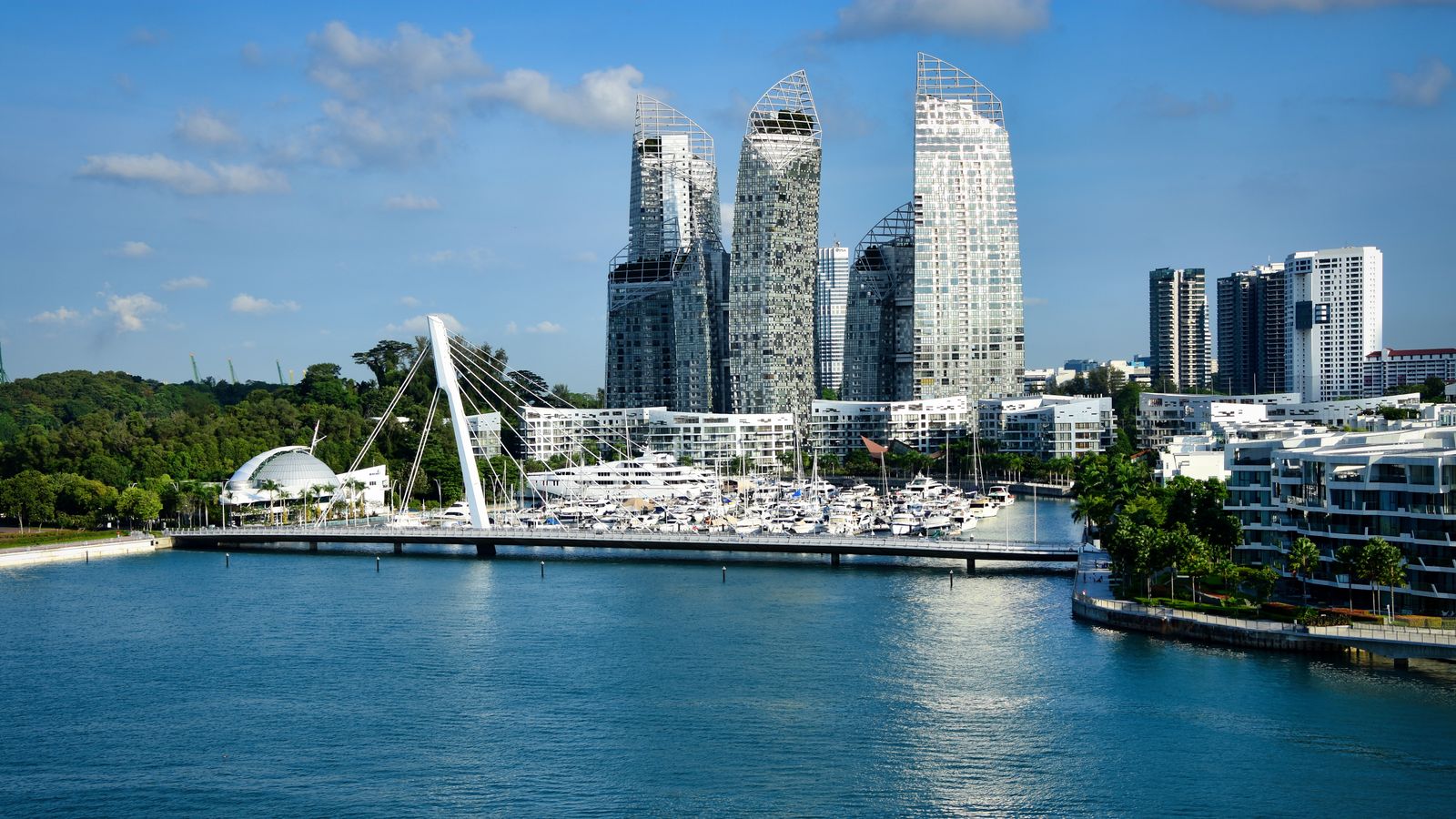
Live in a private condominium in Singapore, from the towers of the East Coast to the developments ringing the city, and you are, whether you think about it or not, a member of an MCST. This four-letter acronym sits at the center of how Singapore runs its strata housing, and understanding it is the key to understanding why your estate is clean, secure, well-maintained and financially sound, or why it is not.
Singapore’s strata living is among the most organized in the world, backed by a clear legal framework and an established professional industry of managing agents. Yet the administration behind it, contributions, funds, meetings, maintenance, access and communication, is genuinely complex, and much of it is still run on tools that were never built for the job. This guide explains what the MCST is, how strata management actually works in Singapore, the roles involved, the funds that keep an estate solvent, and how modern software streamlines the whole thing.
What is an MCST?
An MCST stands for Management Corporation Strata Title. It is the legal entity created to own and manage the common property of a strata development. When a condominium is completed and its strata title plan is registered, the MCST comes into existence automatically, and every owner of a unit becomes a member of it.
The logic mirrors strata systems worldwide. You own your unit outright: your apartment, defined by the strata title. But the land, the driveways, the pool, the gym, the lifts, the corridors, the facade and the plant rooms are common property, owned collectively by all the owners through the MCST. Because you share those spaces, you share the cost and the responsibility of maintaining them.
In Singapore’s framework, each unit is assigned a number of share values. Share values determine two things: how much weight an owner’s vote carries, and the proportion of contributions that owner pays toward the funds. A larger unit typically carries more share values, and therefore a larger share of the maintenance charges, than a smaller one.
An MCST is the legal body, formed automatically when a strata development is completed, through which all unit owners collectively own and manage their building’s common property.
The BCA context
Strata management in Singapore does not exist in a vacuum. The Building and Construction Authority (BCA) shapes the built environment through building standards, maintenance requirements and safety regimes that MCSTs must observe: periodic facade inspections, lift maintenance and safety obligations, and standards for the upkeep of aging buildings.
This is significant because a large share of Singapore’s strata stock is maturing. Buildings that went up decades ago now need serious reinvestment: repainting, waterproofing, lift modernization, facade repairs. Meeting those obligations is not optional, and it is expensive, which is exactly why the financial discipline built into the MCST system, especially the sinking fund, matters so much.
Who runs an MCST: council and managing agent
An MCST is a collective of owners, but collectives cannot make hundreds of daily decisions. So the system distributes responsibility across two roles.
The council
The council is a group of subsidiary proprietors (the formal term for unit owners) elected by their fellow owners at the annual general meeting. The council is the decision-making body of the MCST. It approves budgets, oversees finances, decides on major works, appoints contractors and the managing agent, and represents the owners’ collective interest. Council members are volunteers, owners giving their time to steward the estate.
The managing agent
Running an estate day to day is a professional job, so most MCSTs appoint a managing agent (MA): a specialist firm that handles the administration on the council’s behalf. The managing agent collects contributions, keeps the accounts, arranges maintenance, manages contractors, prepares for meetings and keeps records. The division of labor is clean: the council decides, the managing agent executes.
A good managing agent is worth its fee many times over. But a managing agent is only as effective as the information it works with. When contributions, arrears, work orders, bookings and communication are scattered across spreadsheets, paper files and email threads, even a diligent MA spends its time reconstructing reality instead of managing the estate. This is the pressure point that software relieves.
The two funds that keep an estate solvent
Financial health is the difference between an estate that ages gracefully and one that falls into disrepair and special levies. Singapore’s strata framework builds in discipline through two distinct funds, and every owner contributes to both.
| Fund | Purpose | Time horizon |
|---|---|---|
| Management fund | Day-to-day running: cleaning, security, landscaping, common utilities, minor repairs, insurance, managing agent fees. | Short term (this year) |
| Sinking fund | Major, infrequent works: repainting, lift replacement, waterproofing, facade repair, upgrading of common facilities. | Long term (years ahead) |
The management fund is the operating account. It pays the recurring costs of keeping the estate running smoothly, month after month.
The sinking fund is the estate’s savings account. Rather than hitting owners with a sudden, painful special levy when a major job arrives, the MCST contributes to the sinking fund steadily, year after year, so that the money is there when it is needed. For Singapore’s maturing buildings, a healthy sinking fund is the single best indicator of prudent management. Owners increasingly look at it before they buy.
Contributions to both funds are set at the AGM and billed to owners in proportion to their share values. Collecting them reliably, and tracking arrears, is one of the managing agent’s core duties.
The AGM: the heartbeat of accountability
Once a year, the MCST holds its annual general meeting (AGM). This is the central moment of accountability in strata living, and it is where the council answers to the owners. At an AGM, owners typically:
- Approve the accounts for the past year.
- Approve the budget and set the contributions to the management and sinking funds for the year ahead.
- Elect the council for the coming term.
- Vote on major works and other significant decisions.
Everything about an AGM depends on trustworthy financial records. Owners cannot approve a budget they do not understand or trust. Voting, often weighted by share values, must be administered correctly. Notices, agendas, minutes and financial statements must reach every owner in good order. When the underlying records are clean and accessible, the AGM is a productive meeting. When they are not, it becomes a session of doubt and dispute.
By-laws and daily community life
Beyond funds and meetings, an MCST also governs how residents actually live together. By-laws (the estate’s house rules) cover renovation hours, noise, use of the pool and gym, parking, pets and short-term letting. Enforcing them fairly depends on clear communication and a reliable record of notices and requests, so that a decision can always be traced back to a rule and a process. When house rules live only in a founding document nobody reads, disputes fester; when they are visible and communication is logged, the community runs more calmly. This everyday layer, quiet but constant, is as much a part of strata management as the accounts.
Where strata management strains
For all its structure, strata management in Singapore is still, in many estates, run on tools that fight the manager rather than help. The recurring pain points are familiar:
- Contributions and arrears tracked in spreadsheets that fall out of date the moment they are shared.
- Facility bookings for the pool, BBQ pits, function rooms and tennis courts managed on paper logs or a WhatsApp group, with double-bookings and disputes.
- Visitor and contractor access handled with paper registers at the guardhouse, slow and hard to audit.
- Communication with hundreds of households scattered across notices, letters and messaging apps, with no reliable record.
- Council reporting reconstructed painfully before each meeting instead of available at any moment.
Each of these is a data problem in disguise, and data problems are exactly what good software solves.
Choosing and working with a managing agent
For most councils, appointing the right managing agent is the single most consequential decision they make. A capable MA keeps the estate running smoothly, the accounts clean and the AGM well prepared; a weak one leaves the council firefighting. When councils evaluate managing agents, the questions that matter most are practical:
- How current are the financials? Can the council see contributions, arrears and fund balances at any time, or only in a report prepared before the AGM?
- How are contributions collected and reconciled? Manual reconciliation across hundreds of units is slow and error-prone.
- How is the estate’s information shared with owners? Owners who can self-serve raise fewer disputes.
- How are the two funds tracked? The council must always know the health of both the management and sinking funds.
A managing agent equipped with modern software answers all of these confidently, because the platform does the heavy lifting. One that relies on spreadsheets and paper struggles, no matter how diligent its staff. Increasingly, councils treat an MA’s tooling as a proxy for the quality of service they will receive.
A day in the life: running an estate
Picture a managing agent handling a 400-unit condominium in Singapore. The financial year opens with contributions to the management and sinking funds, set at the AGM and billed to every owner in proportion to share values. Through the year, the MA collects those contributions, pays the cleaning, security and landscaping contractors from the management fund, and lets the sinking fund grow toward the repainting due in a few years.
Meanwhile, residents live their daily lives on the estate. One books the BBQ pit for the weekend; another reserves the function room for a birthday; a delivery arrives and the parcel is logged for collection; a contractor needs access to a unit and is issued a time-limited QR pass at the guardhouse. Each of these small events, multiplied across 400 households, is either a source of friction and paperwork or a smooth in-app action, depending entirely on the tools in place.
When the AGM approaches, the council does not scramble. The accounts are already current, the arrears position is known, the fund balances are visible, and the reports assemble themselves from live data. The meeting becomes what it is meant to be: a clear-eyed review and a set of decisions, rather than an argument about whose numbers are correct.
How software streamlines strata management
Modern condo management software takes the entire apparatus of strata administration, funds, contributions, bookings, access, communication, and puts it in one shared, mobile-first system. For a Singapore MCST and its managing agent, a platform like Condovise means:
- Every unit modeled with its owner, share values and contribution, so billing to the management and sinking funds is accurate and automatic.
- Contributions and arrears tracked in real time, so the council and managing agent always know exactly who is current and who is behind.
- Amenity bookings for the pool, gym, BBQ pits and function rooms handled in-app, ending double-bookings and paper logs.
- Guest and staff QR access for secure, auditable entry at the guardhouse, replacing paper visitor books.
- A mailroom to log and notify residents of parcels, and messaging that keeps a clean record of every announcement and request.
- A resident wallet to make paying contributions and booking services frictionless.
Because Condovise is mobile-first, subsidiary proprietors and council members reach everything from their phones, exactly where Singapore residents already live digitally. And for the managing agents who run many estates at once, Condovise’s multi-building portfolio view consolidates occupancy, contributions and arrears across every MCST they manage into one dashboard with aggregated KPIs, so a firm overseeing dozens of developments is never blind to any one of them.
The result is a strata administration that is transparent by default. The council gets clean figures whenever it wants them, not just before the AGM. Owners see their own contributions and their estate’s shared information. The managing agent spends its time managing rather than reconstructing. And the funds that keep the estate solvent are tracked with the discipline the framework intends.
Conclusion: professional strata living, professionally run
Singapore’s MCST system is one of the most robust models of collective property management anywhere. The structure is sound: a legal entity formed automatically, an elected council, a professional managing agent, two funds enforcing financial discipline, and an annual meeting that keeps everyone accountable. What has lagged is the tooling, and in 2026 there is no reason for that gap to persist.
Strata management is, fundamentally, about trust: owners trusting that their contributions are well spent, that the sinking fund will be there when the lift needs replacing, that the accounts presented at the AGM are true. Software does not replace the council or the managing agent. It gives them the transparent, real-time, shared record that makes trust the default rather than a hope.
Condovise brings strata administration, resident services and portfolio oversight together in one mobile-first platform built for MCSTs and the managing agents who run them. To see how it fits, explore property management in Singapore, our condo management features and multi-building management for managing agents.
Running an MCST or a portfolio of Singapore estates and want strata administration that streamlines the work? Request a quote and we will tailor a setup to your buildings.